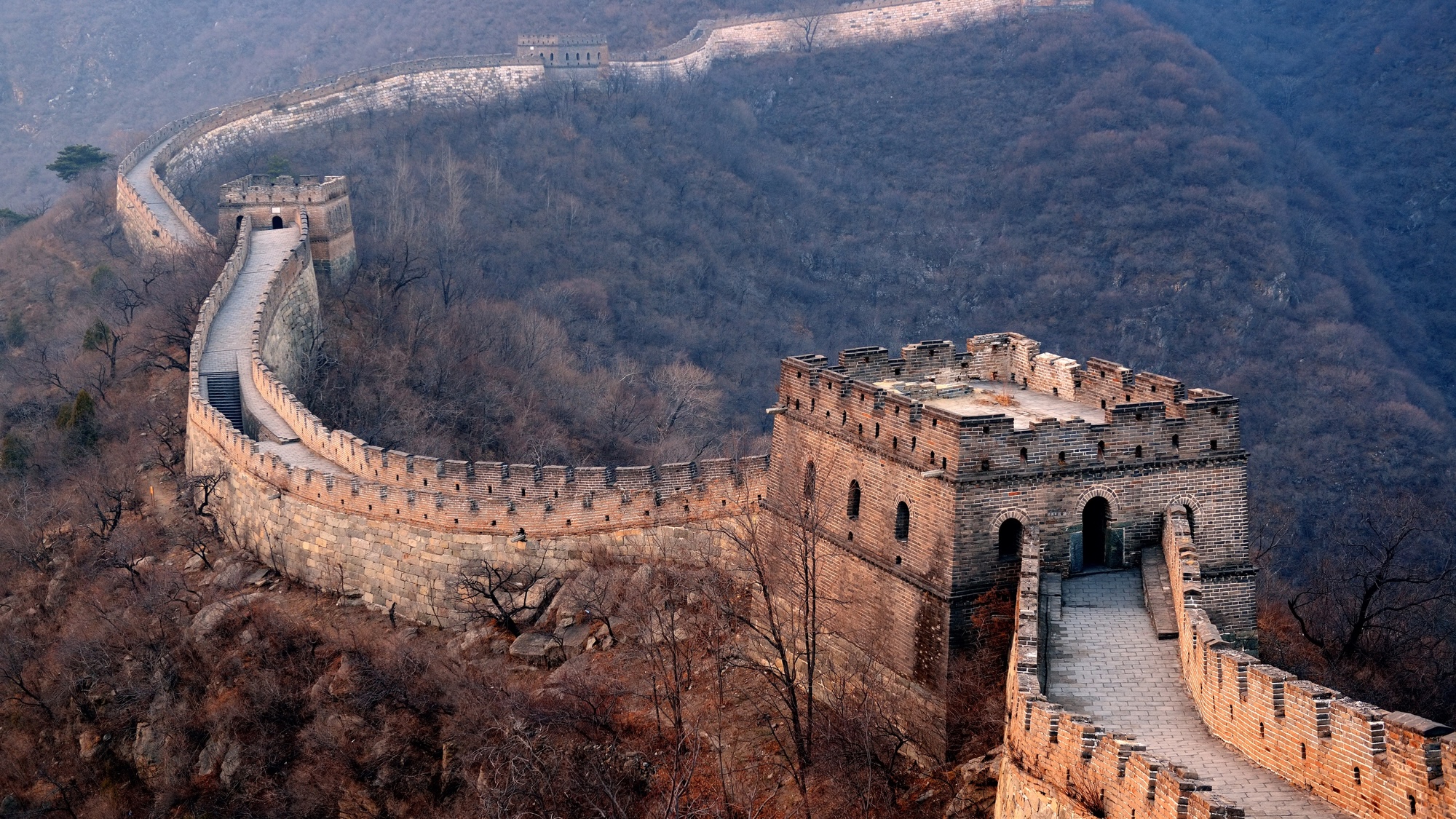
Great Wall of China
The Great Wall of China is one of the most magnificent feats of engineering ever accomplished by human civilization. It is not a single wall but a series of fortifications, walls, watchtowers, trenches, and natural barriers that were built across the northern part of China to protect Chinese states and empires from invasions by various nomadic tribes such as the Mongols, Xiongnu, and others. The total length of the wall, including all its branches, stretches over 21,000 kilometers, making it the longest man-made structure in the world. The Great Wall was not built at once; construction began in different periods as early as the 7th century BC, when individual states built walls for their own defense. It was Emperor Qin Shi Huang, the first emperor of unified China, who ordered the connection of these walls, creating a single continuous barrier that would symbolize the strength and unity of the empire.
The wall was built using materials that varied according to the geography. In mountainous areas, large stones and bricks were used; in deserts and plains, packed earth, wood, and other locally available materials were used. The construction required an enormous workforce, including soldiers, peasants, and prisoners. Life for these workers was extremely harsh, with many dying from exhaustion, hunger, and accidents during construction. Because of the sheer number of lives lost, the Great Wall is often referred to as “the longest cemetery on earth.” In addition to its defensive purpose, the wall served as a means of communication and control. Watchtowers were built at regular intervals, from which soldiers could send smoke signals during the day and fire signals at night to warn neighboring regions of enemy movements.
Over the centuries, the Great Wall was continuously repaired and extended by several dynasties, including the Han, Sui, Tang, and Ming. During the Ming Dynasty, the wall reached its greatest height and strength, with wide ramparts and fortified watchtowers capable of holding weapons and soldiers. The wall also facilitated trade along the Silk Road and allowed the collection of taxes and regulation of migration across the empire. Architecturally, the Great Wall is an incredible achievement, as it follows the contours of mountains, valleys, and deserts, creating a natural defense line that blends with the environment. Today, it remains a UNESCO World Heritage Site, attracting millions of visitors who come to admire its sheer size, historical significance, and the ingenuity of the builders. The Great Wall of China stands not just as a military fortification but as a symbol of human perseverance, strategic thinking, and the cultural identity of China, connecting modern society to the ancient past.