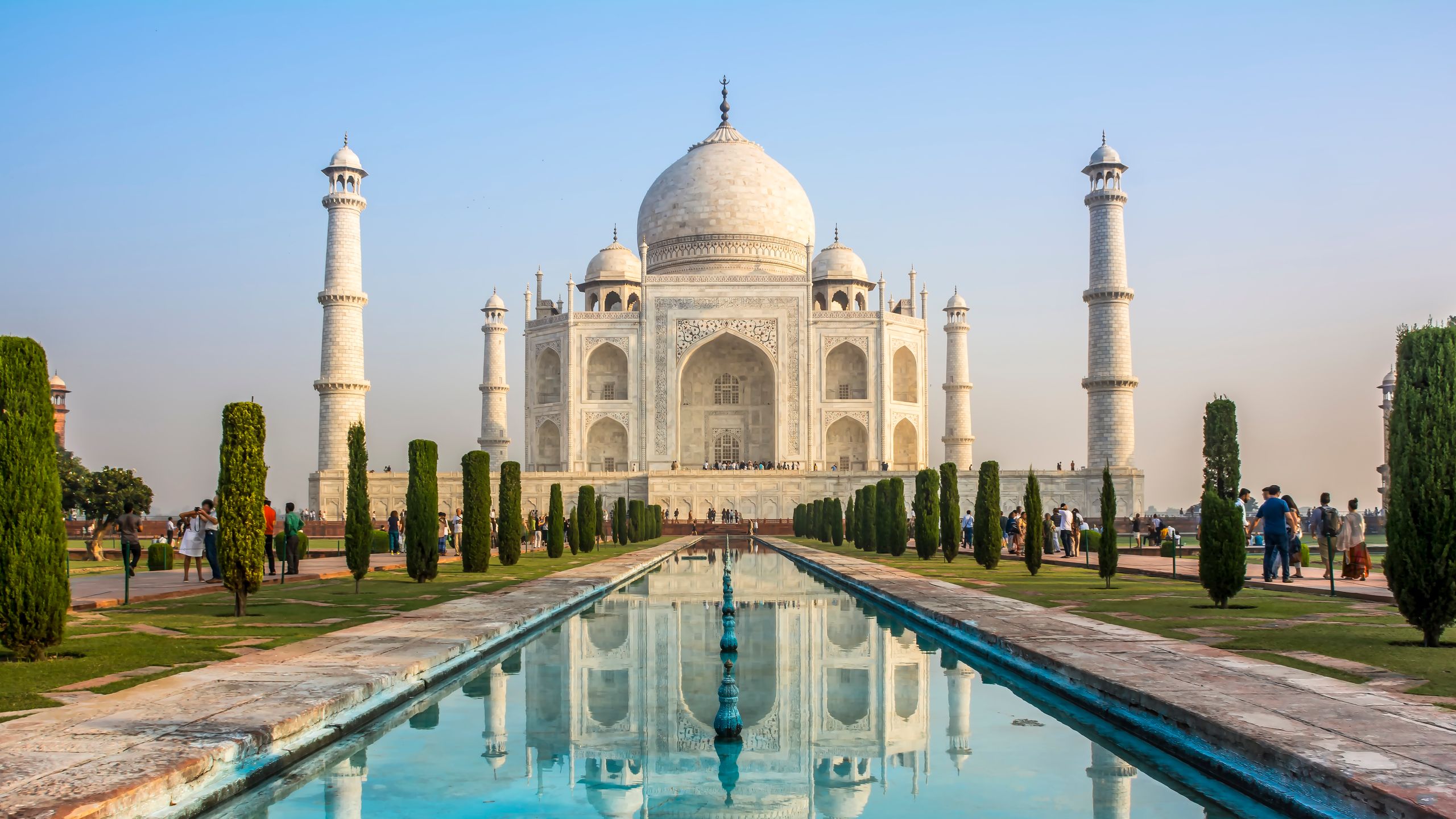
Taj Mahal (India)
The Taj Mahal is one of the most iconic monuments in the world, located in Agra, India. It was commissioned by Mughal Emperor Shah Jahan in 1632 in memory of his beloved wife Mumtaz Mahal, who died during childbirth. Construction took approximately 22 years and employed thousands of artisans, craftsmen, and laborers from across India and Central Asia. The Taj Mahal is a stunning example of Mughal architecture, which combines elements of Islamic, Persian, Ottoman Turkish, and Indian architectural styles. The central structure is made of pristine white marble that changes color depending on the time of day, appearing pink in the morning, white during the day, and golden in the evening.
The monument is surrounded by lush gardens, reflective pools, and a complex of buildings including a mosque and a guest house. The intricate carvings, inlay work of precious and semi-precious stones, and calligraphy of Quranic verses demonstrate the incredible craftsmanship of the artisans. The Taj Mahal was designed not only as a tomb but also as a symbol of eternal love, architectural perfection, and harmony between human-made beauty and nature. Its symmetrical design, perfectly aligned gardens, and elegant domes create a sense of balance and peace that has captivated visitors for centuries.
Over the years, the Taj Mahal has faced challenges such as pollution, environmental decay, and tourism pressure, but it has been carefully restored and protected as a UNESCO World Heritage Site. Today, it stands as a symbol of India’s rich cultural heritage, artistic achievement, and the enduring power of love. Millions of tourists from around the world visit the Taj Mahal every year to marvel at its beauty and to experience the sense of awe that this magnificent structure continues to inspire.