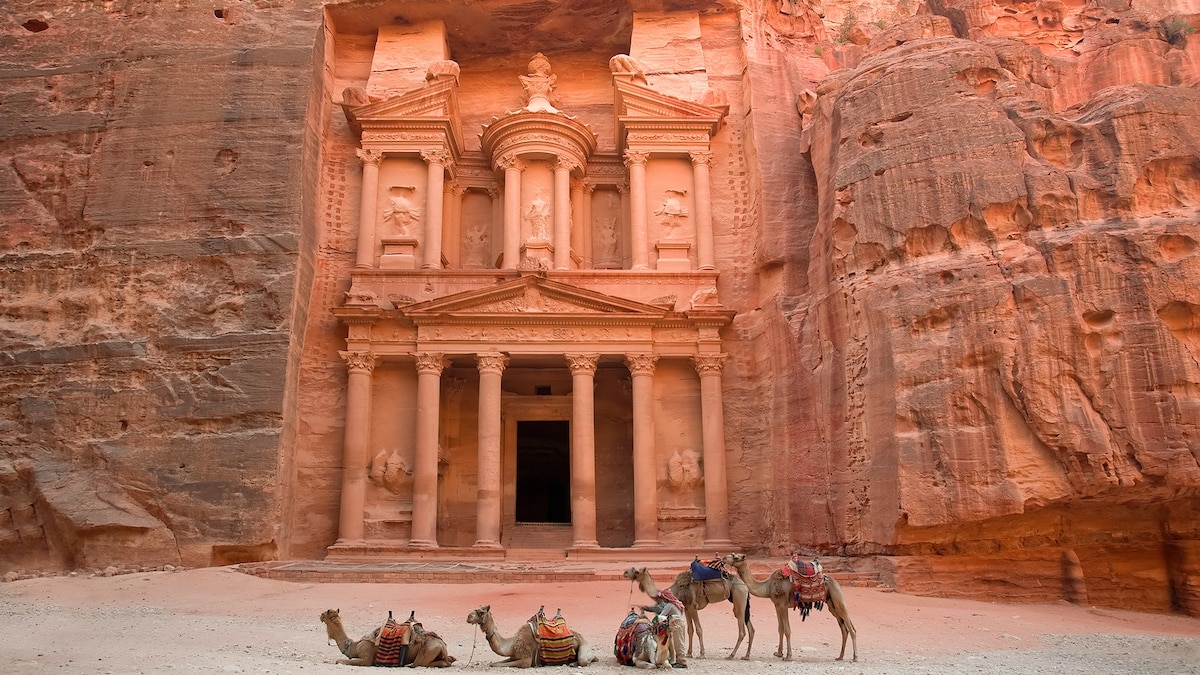
Petra (Jordan)
Petra is an ancient city located in southern Jordan, famous for its stunning rock-cut architecture and advanced engineering. It is often called the “Rose City” because of the reddish-pink color of the sandstone cliffs in which its structures are carved. Petra was established around the 4th century BC by the Nabataean civilization, an Arab tribe that controlled major trade routes linking Arabia, Egypt, and the Mediterranean. The city became a thriving center of commerce and culture, famous for its wealth and strategic location. Traders from all over the ancient world came to Petra, bringing spices, silk, incense, and precious metals. This trade made Petra one of the richest cities of its time, and its influence extended far beyond the borders of modern-day Jordan.
The architecture of Petra is truly remarkable. Unlike other ancient cities where buildings were constructed from separate materials, most of Petra’s structures were carved directly into the solid sandstone cliffs. This includes temples, tombs, houses, and monumental facades. The most iconic monument is Al-Khazneh, also known as “The Treasury,” which features intricately carved Corinthian-style columns, sculptures, and decorative motifs. Petra also had an advanced water management system that included dams, cisterns, channels, and reservoirs, allowing the city to thrive in an arid desert environment. The Nabataeans’ knowledge of hydraulics and engineering is evident in how they captured and stored water, ensuring the survival of the city even in times of drought.
Petra declined after changes in trade routes and the impact of earthquakes, eventually being abandoned and hidden from the outside world for centuries. It was rediscovered in 1812 by Swiss explorer Johann Ludwig Burckhardt. Today, Petra is a UNESCO World Heritage Site and is considered one of the New Seven Wonders of the World. Tourists and archaeologists are captivated by its monumental beauty, historical significance, and the incredible skill of the Nabataean builders. Petra stands as a testament to human creativity, resourcefulness, and the ability to adapt architecture to the natural environment, blending cultural heritage with breathtaking natural landscapes.