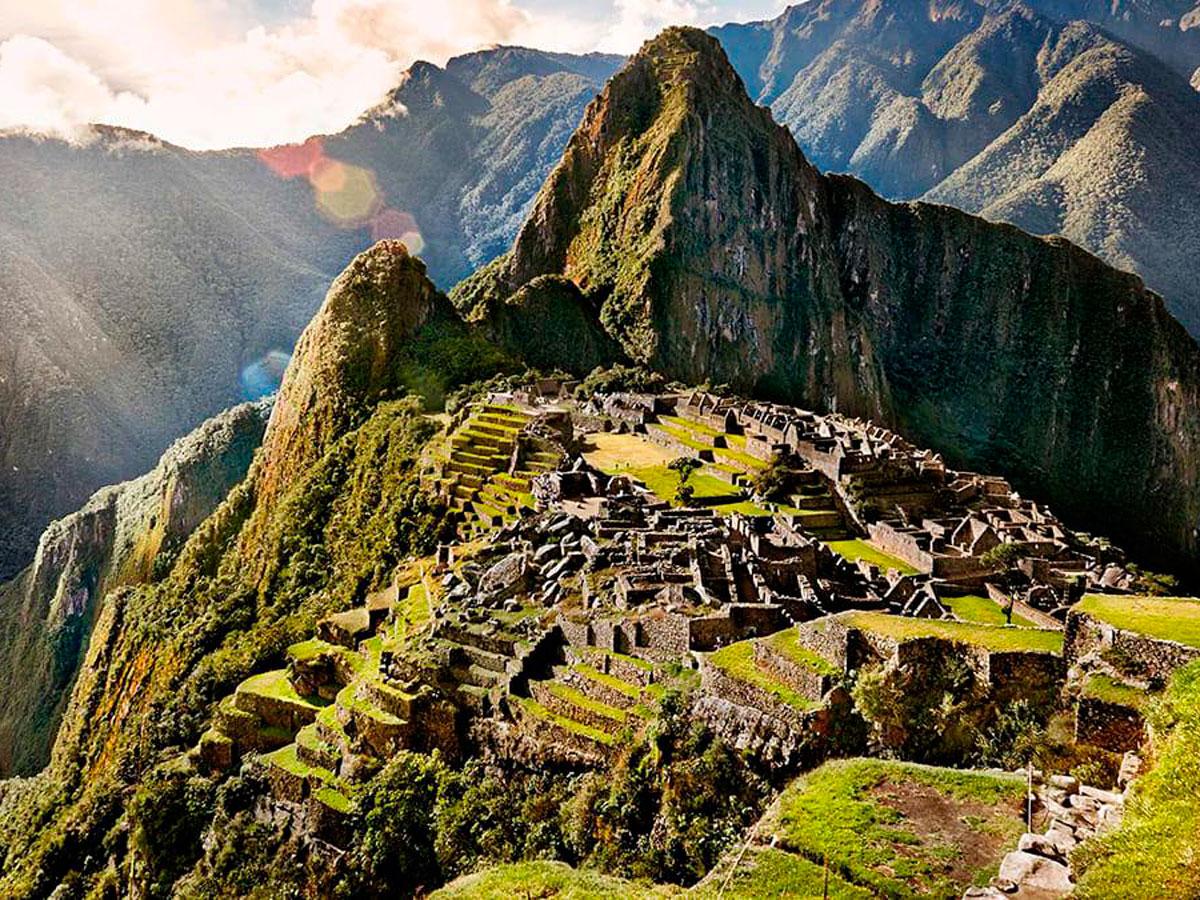
Machu Picchu (Peru)
Machu Picchu is an ancient Inca citadel located high in the Andes Mountains of Peru, at an altitude of approximately 2,430 meters above sea level. It was built in the 15th century during the reign of the Inca emperor Pachacuti and is considered one of the finest examples of Inca architecture and engineering. The city is composed of temples, palaces, residential buildings, terraces, and sophisticated agricultural areas, all meticulously constructed using a technique called “ashlar masonry,” where stones are cut to fit perfectly without mortar. This precision allowed the structures to withstand earthquakes, a common occurrence in the region, showcasing the Incas’ advanced understanding of structural stability and seismic activity.
Machu Picchu served multiple purposes, including as a royal estate for the emperor, a religious center, and possibly an astronomical observatory. The city is strategically located between two peaks, overlooking the Urubamba River valley, which provided both protection and access to resources. Water management was highly advanced, with aqueducts, fountains, and drainage systems ensuring a stable water supply while preventing erosion and landslides. Agricultural terraces surrounding the city allowed the Incas to grow crops on steep slopes, demonstrating remarkable innovation in adapting to mountainous terrain. The alignment of certain temples and buildings also reflects the Incas’ knowledge of astronomy, marking solstices and equinoxes with precision.
Machu Picchu remained hidden from the outside world for centuries after the Spanish conquest, as it was never discovered by Spanish conquistadors. It was brought to international attention in 1911 by American historian Hiram Bingham. Today, Machu Picchu is a UNESCO World Heritage Site and one of the most visited tourist destinations in South America. It is celebrated for its stunning scenery, architectural mastery, and the ingenuity of the Inca civilization. Machu Picchu stands as a testament to the Incas’ ability to integrate human-made structures seamlessly into the natural landscape, combining functionality, spirituality, and beauty in one of the world’s most iconic historical sites.