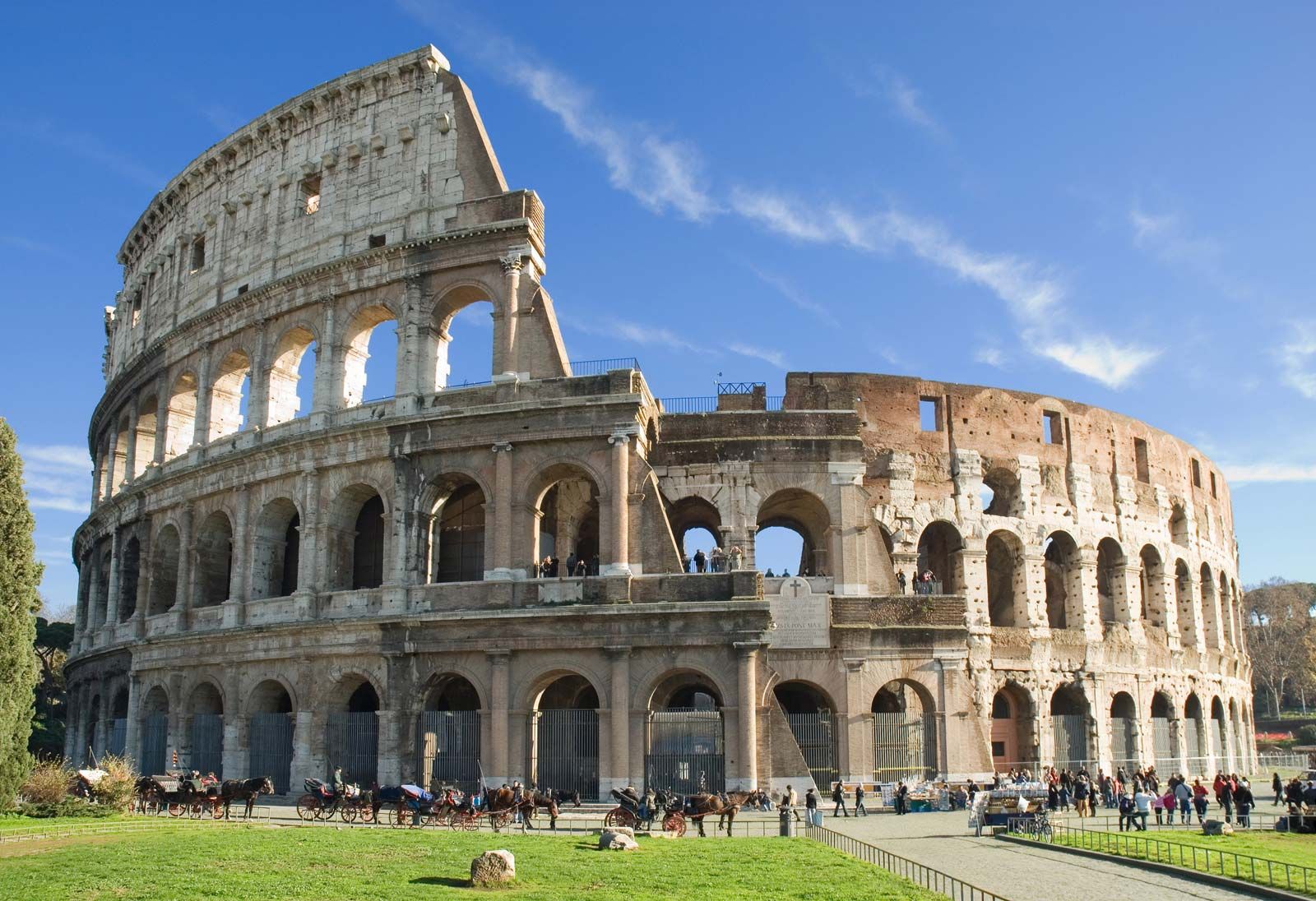
Colosseum (Italy)
The Colosseum, also known as the Flavian Amphitheatre, is a massive ancient amphitheatre located in the center of Rome, Italy. Construction began under Emperor Vespasian in AD 72 and was completed in AD 80 by his son Titus. It is one of the greatest examples of Roman engineering and architecture, reflecting the grandeur, power, and organizational skill of the Roman Empire. The Colosseum could hold approximately 50,000 to 65,000 spectators and was used for various forms of public entertainment, including gladiator contests, animal hunts, and mock naval battles.
The Colosseum was constructed using concrete, travertine stone, and bricks, employing advanced techniques such as arches and vaults, which allowed the massive structure to support tens of thousands of spectators. Beneath the arena floor, a complex network of tunnels, cages, and machinery was used to house animals, gladiators, and stage props. The design of the Colosseum also included retractable awnings to provide shade for spectators, demonstrating the Romans’ attention to comfort and functionality. Gladiatorial games were both entertainment and a political tool, showing the emperor’s generosity and power while reinforcing social order and Roman cultural values.
Over the centuries, the Colosseum suffered damage from earthquakes, fires, and stone looting, yet large portions still stand as a remarkable testament to Roman ingenuity. Today, the Colosseum is one of the most visited monuments in the world and a UNESCO World Heritage Site. It symbolizes ancient Roman civilization, architectural mastery, and the cultural significance of public entertainment in history, continuing to inspire awe and admiration among millions of visitors each year.