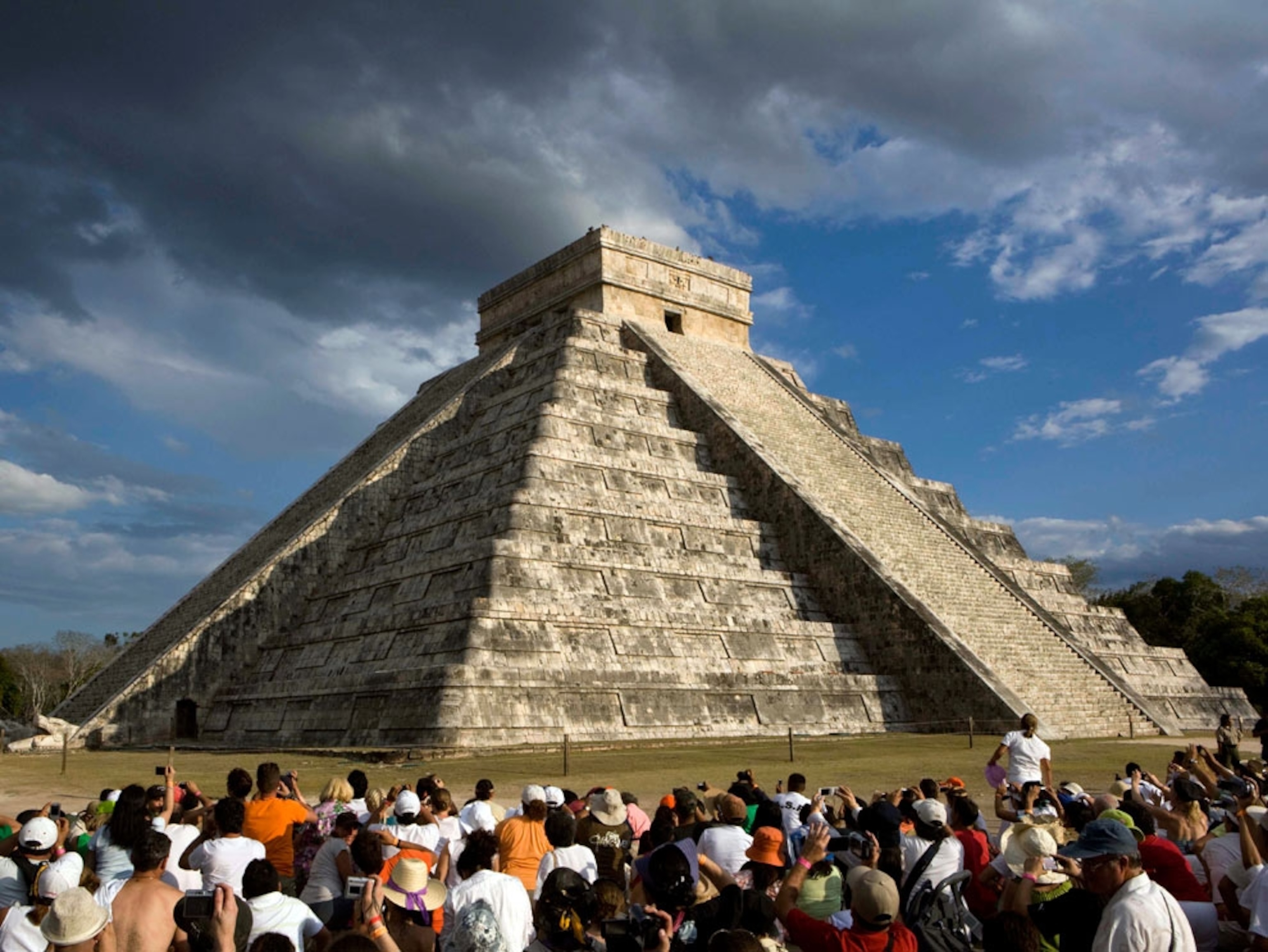
Chichen Itza (Mexico)
Chichen Itza is a large pre-Columbian archaeological site located in the Yucatán Peninsula of Mexico. It was one of the most important cities of the Mayan civilization and served as a political, economic, and religious center between the 9th and 12th centuries. The city is famous for its monumental architecture, intricate carvings, and advanced knowledge of astronomy and mathematics. Chichen Itza’s name in the Mayan language means “At the mouth of the well of the Itza,” referring to the sacred cenotes (natural wells) in the area that were used for ritual offerings and religious ceremonies.
The most iconic structure of Chichen Itza is El Castillo, also known as the Temple of Kukulkan, a massive step pyramid dedicated to the feathered serpent god. The pyramid has 365 steps, corresponding to the days of the solar year, reflecting the Mayans’ sophisticated understanding of astronomy. During the spring and autumn equinoxes, a unique shadow phenomenon occurs on the steps of the pyramid, creating the illusion of a serpent slithering down the staircase, which demonstrates the Mayans’ precise astronomical calculations. Besides El Castillo, Chichen Itza contains ball courts, observatories, temples, and administrative buildings that illustrate the Mayans’ architectural ingenuity.
Chichen Itza also served as a cultural hub where art, religion, politics, and commerce intertwined. Its observatories allowed the Mayans to study the stars, planets, and seasonal changes, while its ceremonial sites were used for worship, human sacrifices, and festivals. Over time, the city declined due to environmental changes, wars, and shifting trade routes, eventually being abandoned. Rediscovered centuries later, Chichen Itza is now a UNESCO World Heritage Site and is recognized as one of the New Seven Wonders of the World. It continues to attract scholars and tourists alike, standing as a testament to the Mayan civilization’s intelligence, artistry, and harmony with nature.